If you’re wondering how to design a rose garden that looks expensive and elegant, the difference is rarely about the roses themselves. It comes down to structure, repetition, and how intentionally each element is placed. An elevated rose garden is not created by adding more plants, but by refining choices like clean layouts, controlled color palettes, and companion planting that enhances rather than competes. When these principles are applied correctly, even a simple rose bed can feel designed, cohesive, and high-end.
1. Start With Structure Before You Think About Plants
Expensive-looking gardens are built on structure first, planting second.
Before choosing roses, define:
✦Clear bed shapes (symmetrical or intentionally curved)
✦Strong edging (stone, brick, or low hedging)
✦Repeating lines that guide the eye through the space
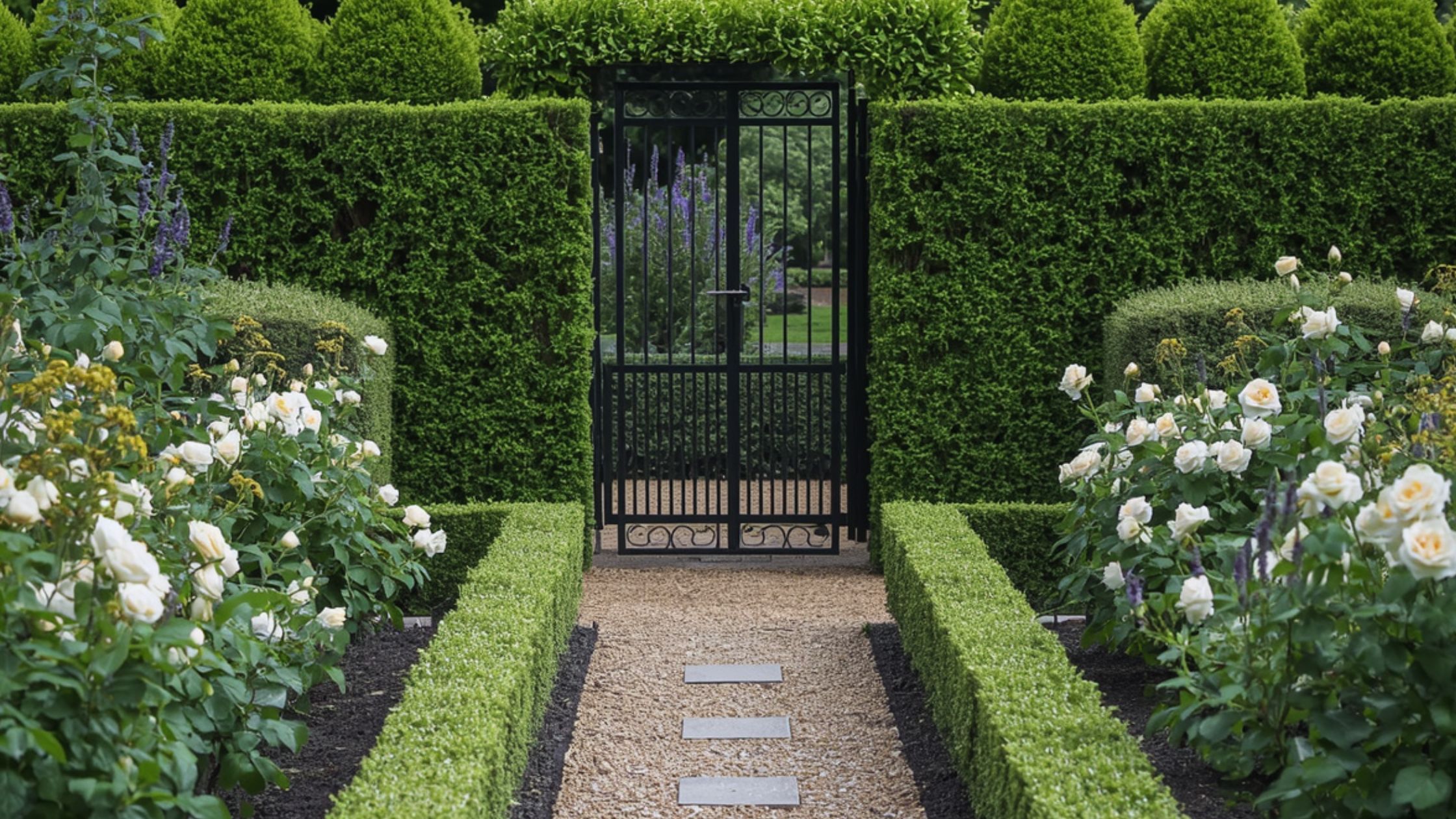
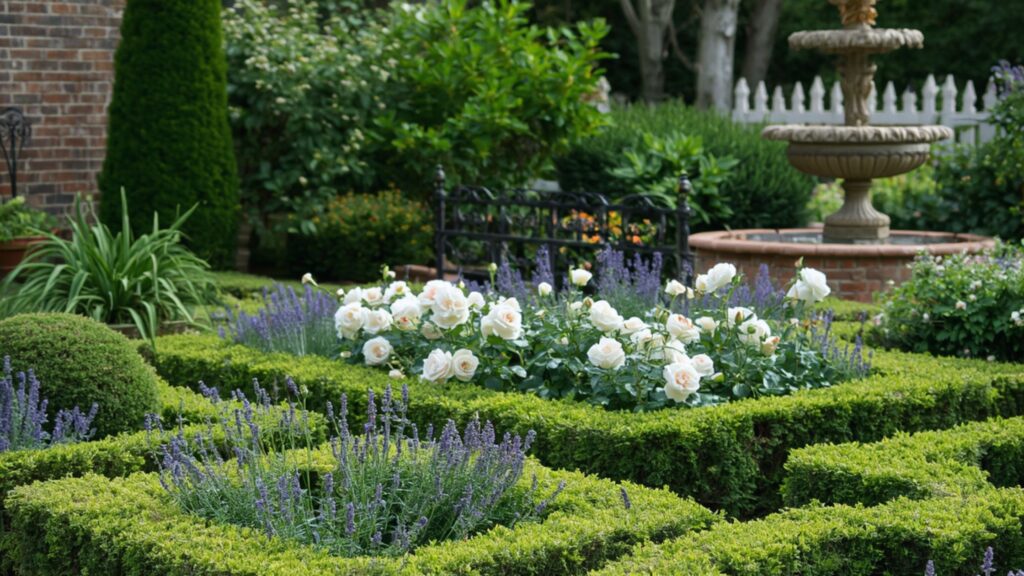
Boxwood is one of the most effective structural plants for this purpose. Used as a border, it immediately creates a framed, estate-style look that elevates everything inside it.
Without structure, a rose garden will always look unfinished—no matter how beautiful the blooms are.
2. Use Companion Planting to Elevate, Not Compete
One of the most effective ways to create a luxury rose garden is through restraint in companion planting.
The goal is not variety but rather cohesion.
Best pairings include:
✦Lavender for softness and contrast
✦Lamb’s ear for muted texture
✦Artemisia for silvery tone and refinement
✦Russian sage for height and movement
These plants enhance roses without overpowering them, creating a layered but controlled visual effect.
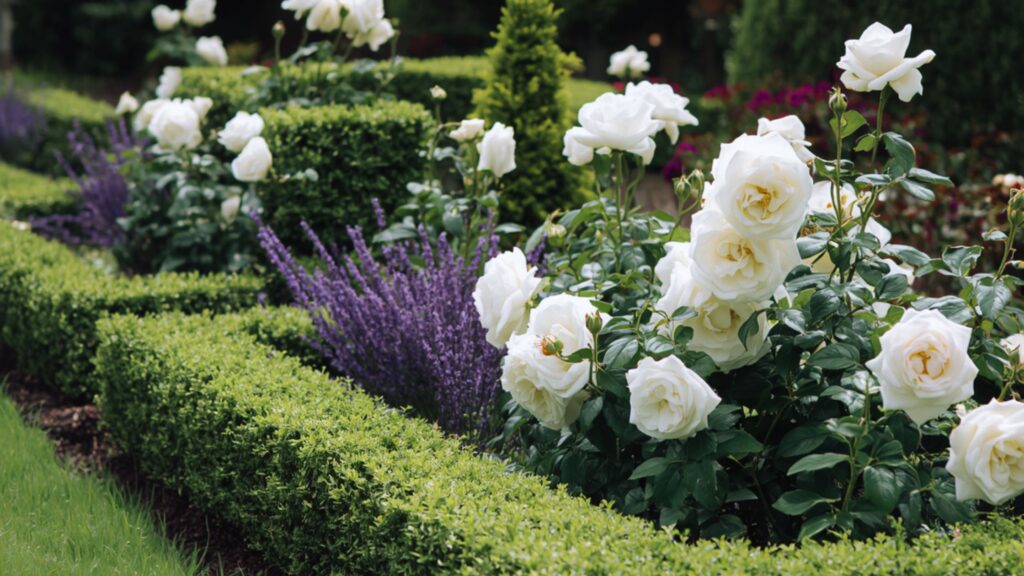
Lavender with white or blush roses is especially effective for a clean, elevated aesthetic.
- Related article: What to Plant with Roses: Top 10 Companion Plant Choices
3. Keep the Color Palette Tight and Intentional
A garden that feels expensive is almost always visually restrained.
Instead of mixing many colours, focus on:
✦White roses with green and silver tones
✦Blush roses with muted lavender accents
✦Cream roses with soft, neutral companions
White roses are particularly powerful in design because they create a structured, architectural effect when planted in repetition.
The more controlled the palette, the more refined the garden feels.
4. Layer Your Planting for Depth and Dimension
Flat planting makes a garden feel basic. Layered planting makes it feel designed.
A simple structure to follow:
✦Front layer: low plants like creeping thyme or lamb’s ear
✦Middle layer: roses as the focal point
✦Back layer: taller plants like salvia or ornamental grasses
This creates depth and guides the eye naturally through the space, giving the garden a more expansive and intentional feel.
5. Incorporate Evergreens for Year-Round Structure
A well-designed rose garden should never rely only on seasonal blooms.
Evergreen elements provide consistency throughout the year:
✦Boxwood borders
✦Structured hedging
✦Small evergreen shrubs
These anchor the garden visually, ensuring it still feels composed even when roses are not in bloom.
This is one of the clearest distinctions between average and high-end garden design.
6. Repeat Key Elements for a Cohesive Design
Repetition is one of the most overlooked principles in garden design.
Instead of introducing too many different plants, repeat:
✦The same rose varieties in clusters
✦ The same companion plants throughout the beds
✦The same structural elements across the garden
This creates rhythm, consistency, and visual calm , all qualities that are strongly associated with luxury landscapes.
7. Edit Ruthlessly: Less Creates More Impact
A common mistake in rose gardens is over-planting.
An elevated design typically uses:
✦2–3 rose varieties
✦A limited selection of companion plants
✦One consistent color story
The more curated the selection, the more intentional the garden feels.
In luxury design, restraint is what creates impact, not abundance.
Understanding how to design a rose garden that looks expensive comes down to clarity, structure, and restraint. When you prioritise layout, control your colour palette, and repeat key design elements, the result is a garden that feels intentional and refined. It’s not about having more, it’s about designing better. That is what creates a rose garden that feels elevated, luxurious, and timeless.
Sources
- Royal Horticultural Society (RHS) – Rose growing and garden design principles
- Missouri Botanical Garden – Companion planting guidance
- University of Illinois Extension – Landscape design fundamentals