As the days grow longer and hints of spring begin to emerge, many of us start dreaming about morning coffee on the balcony, alfresco dinners, slow weekends spent outdoors or even just keeping windows and doors open. But before you fully settle into the season, there’s one important step that should not be overlooked — preventing wasps from reclaiming your outdoor living spaces. Wasps are creatures of habit. If they successfully built nests near your home last year, there is a strong chance they’ll attempt to return. The good news? Early prevention is remarkably effective.
With a few thoughtful preparations, you can transform your patio, balcony, or porch into a peaceful, pest-resistant sanctuary, one that feels safe, welcoming, and ready for spring entertaining. Let’s get ahead of the problem before it starts.
Why Early Prevention Matters:
Queen wasps emerge in early spring to scout nesting locations. If you intercept them during this phase, you dramatically reduce the likelihood of a full colony forming later. Think as soon as the temperatures start rising.
Translation: a small effort now prevents a major headache in summer.
Wasps are especially attracted to:
- Protected corners
- Ceiling overhangs
- Deck railings
- Outdoor furniture frames
- Grills
- Storage boxes
- Eaves and light fixtures
Your goal is simple: make your space feel uninviting before they decide to move in.
Everything You Need Top Know To Prevent Wasps From Returning:
1. Do a Thorough Early-Spring Inspection:
Before decorating or planting, step outside and examine your space carefully.
Look for:
- Old nests (never leave them up)
- Mud tubes
- Chewed wood
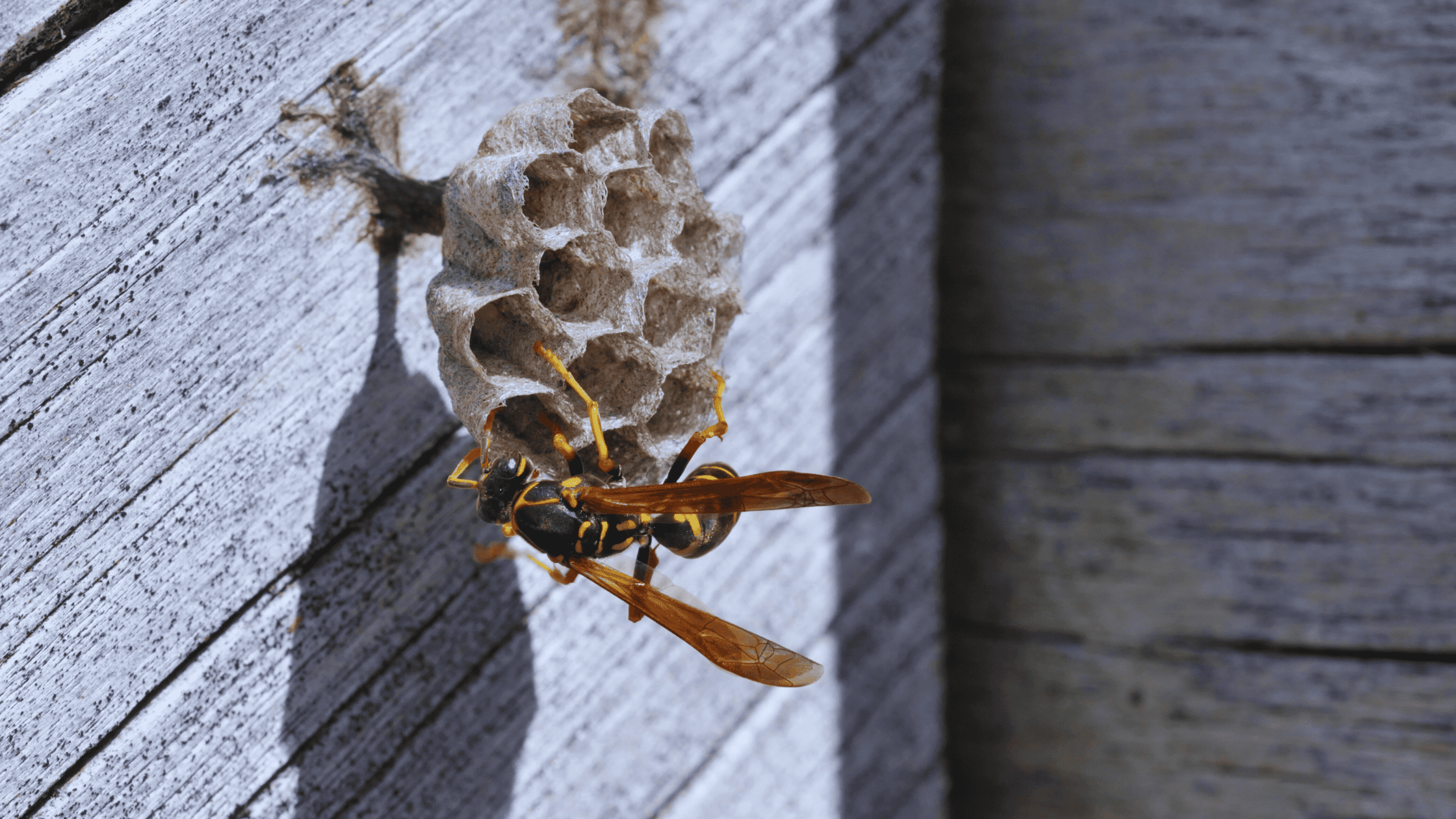
- Small starter nests
If you spot anything suspicious, remove it immediately , ideally at dusk when activity is lowest.
Pro Tip: Even abandoned nests can signal to new queens that your space is suitable.
2. Spray Natural Deterrents Before Nesting Begins
At LF we prefer a more natural approach so plant-based sprays are excellent preventative tools. Peppermint oil is especially disliked by wasps. But there is also a time and place for chemical based prevention, especially if infestation is significant.
Disclaimer: The information provided in this article is intended for educational and preventative purposes only. If you suspect a significant wasp infestation or feel your safety may be at risk, it is always best to consult a licensed pest control professional for proper assessment and removal.
Some Natural Favorites:
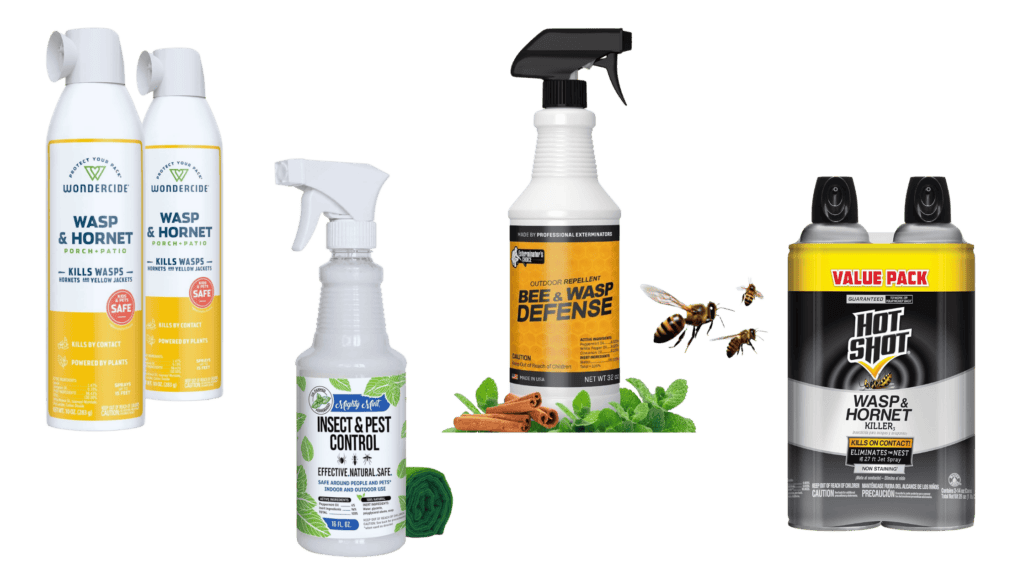
- Wondercide Wasp & Hornet Porch & Patio Spray
- Mighty Mint Peppermint Oil Insect Repellent Spray
- Exterminators Choice Bee Spray & Wasp Control
A not so natural favorite and best-seller:
Where to spray:
- Railings
- Door frames
- Outdoor cushions
- Umbrellas
- Garbage areas
Repeat every couple of weeks during early spring.
3. Eliminate What Attracts Them
Wasps are opportunistic feeders. Remove the invitation, and they often move on.
Be mindful of:
- Food left outside
- Sugary drink residue
- Pet food
- Fallen fruit
Tip: Wipe down any spills or leftover mess before going back inside.
Small habits make a huge difference.
4. Seal Entry Points
If you have a balcony or patio attached to your home, inspect for tiny openings.
Seal:
- Wall cracks
- Gaps near vents
- Window frame openings
This prevents wasps from nesting inside structural cavities , a far bigger problem.
5. Use Scent as a Stylish Deterrent
Citronella doesn’t just repel mosquitoes it can also help discourage wasps while creating beautiful ambiance. This prevents wasps from nesting inside structural cavities , a far bigger problem.
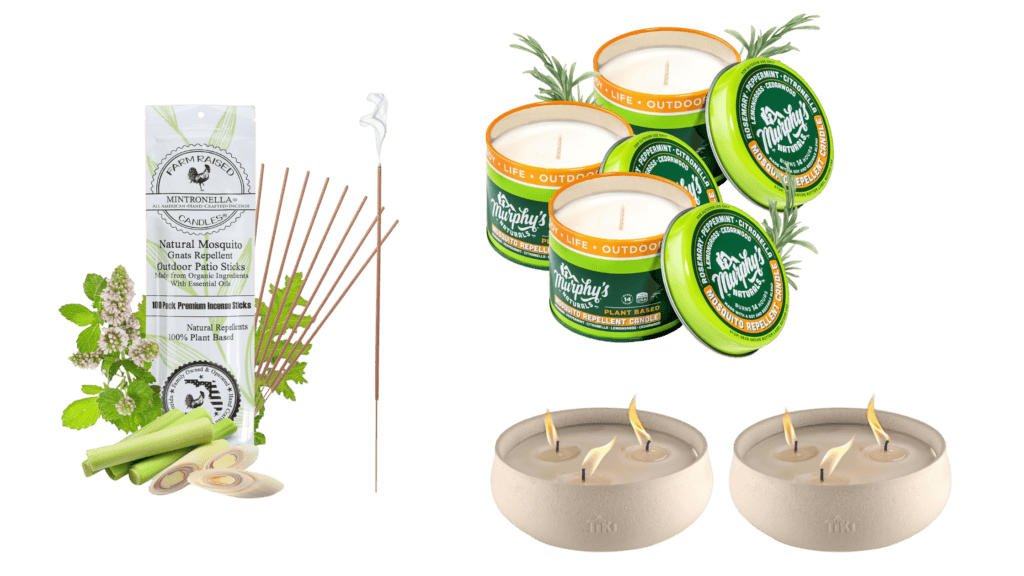
Some well loved favorites:
- Farm Raised Candles Mintronella Citronella & Peppermint Mosquito Repellent Incense Sticks
- Murphy’s Naturals Mini Mosquito Bug Repellent Candles
- TIKI Citronella Candle 2-Pack – 7-Inch White Wax Bowl with Concrete Finish
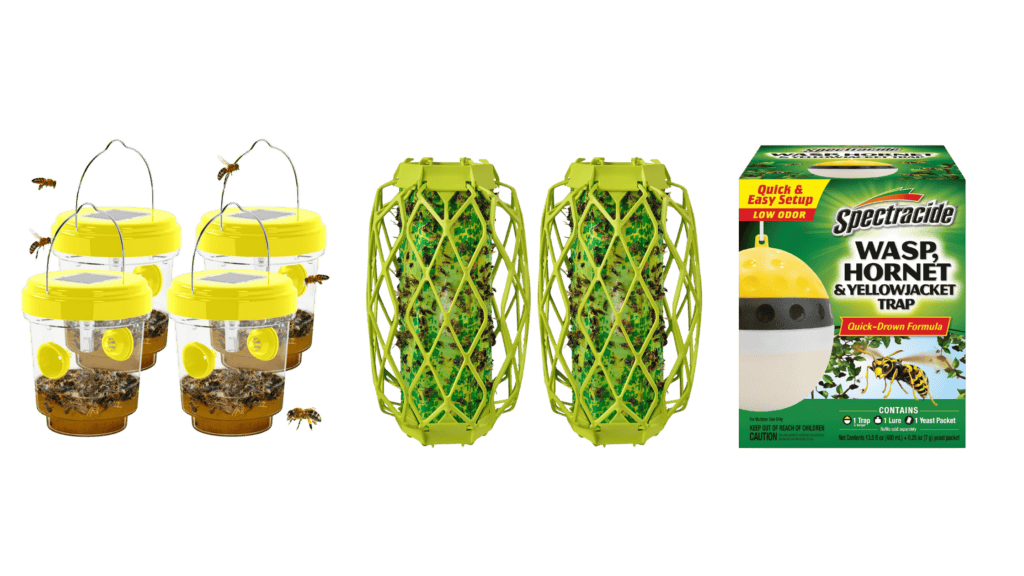
6. Set Traps AWAY From Living Areas
Traps are highly effective if you have the space as placement matters greatly. Never hang them near where you relax. Instead, position traps at the perimeter of your yard or balcony to lure wasps away from you. This creates a protective buffer zone around your space.
Shop Hanging Traps:
- Wasp Traps for Hunting Wasps, Bees, Hornets, Insects, Yellow Jacket Traps
- RESCUE! VisiLure® TrapStik for Wasps
- Spectracide Wasp, Hornet & Yellowjacket Trap, Hanging Wasp & Hornet Trap
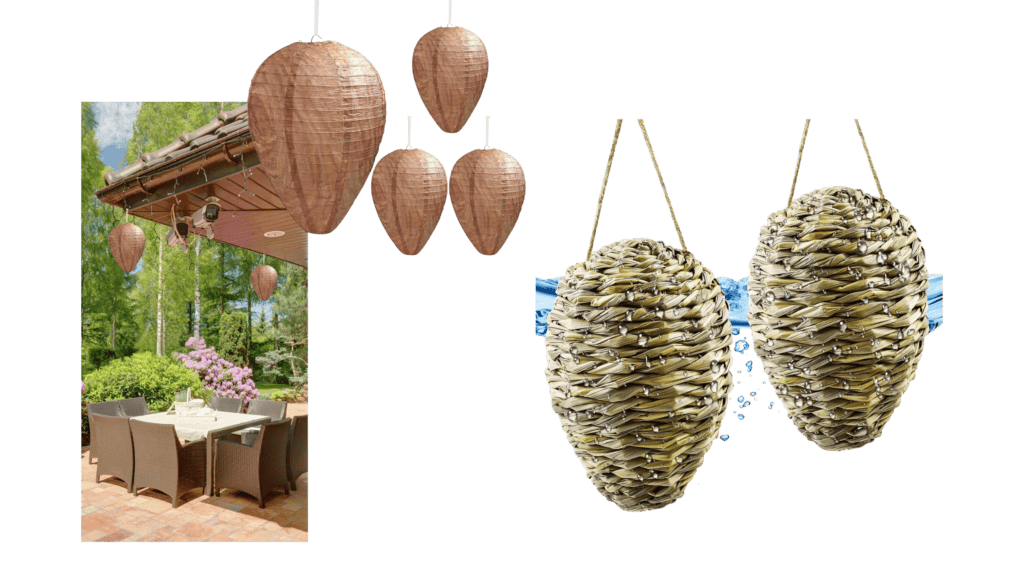
7. Use Decoy Nests to Stop Colonies Before They Start
Wasps are territorial and rarely build near another colony. Hanging a realistic decoy nest can discourage them from settling in at all.
Placement tips:
- Hang under eaves
- Place near seating areas
- Install early in the season (this is key)
Think of this as your first line of defense.
Best Options:
- 4 Pack Wasp Nest Decoy Hanging Wasp Nest Stay Away
- Woven Crochet Wasp Nest Decoy, Waterproof – aesthetic option
Create an Outdoor Space You Can Actually Use
Your outdoor space should feel like an extension of your home , somewhere you can sip coffee slowly, host friends effortlessly, and unwind without scanning the sky. A little preparation now ensures your spring and summer remain exactly that: relaxed, beautiful, and interruption-free.
Plants To Use As Secondary Prevention To Help Repel Wasps
Plants alone usually won’t eliminate a wasp problem. Experts emphasize combining plantings with smart prevention, like sealing cracks, removing food scraps, and securing trash, to stop wasps from nesting nearby. Think of plants as part of a layered defense, not a standalone solution.
Scented plants + cleanliness + sealing entry points = fewer returning wasps.
1. Mint (especially spearmint or peppermint)
Wasps tend to dislike powerful scents, and mint is one of the most commonly recommended deterrents. Strong-smelling herbs are often suggested for planting near patios or entry points.
Bonus: peppermint oil diluted with water can also be sprayed around doors and windows.
Pro tip: grow mint in containers — it spreads aggressively.
2. Lavender
Lavender’s fragrance is pleasant to humans but off-putting to many insects. Experts frequently recommend it as part of an eco-friendly approach to keeping wasps away from outdoor spaces.
Design bonus: it fits beautifully into balcony planters.
3. Rosemary
Another aromatic herb, rosemary is often listed alongside lavender and mint as a plant whose scent may discourage wasps from lingering.
Extra perk: it doubles as a culinary herb.
4. Citronella
Better known for repelling mosquitoes, citronella is also commonly recommended in wasp-prevention strategies due to its strong smell.
5. Thyme and Basil
These kitchen staples are frequently grouped with other fragrant herbs that can help reduce wasp activity around the home.
- Related article: The 9 Best Flowers to Naturally Repel Pests

The secret to preventing wasps isn’t aggressive treatment , it’s early, strategic action.
Inspect. Deter. Seal. Maintain.
Do these things before the season begins, and you’ll dramatically reduce the chance of unwanted guests. Because the only thing that should be buzzing around your balcony this spring…
is conversation.